Treating Equine Metabolic Syndrome With Herbs
Lorraine Dini’s “Tommy” – A Case History
Early in September 2025, my Standardbred gelding “Tommy” became lame in one front hoof, altough there was heat in the hoof there was no digital pulse. This lameness was on again, off again for some time but didn’t stop him moving about. So I arranged for the vet to visit, and it was only the day before when Tommy became so lame he wasn’t too keen on moving. I was extremely concerned as he had no lameness in my 5 years of owning him.
To say I was blown away when the vet said laminitis is an understatement . How could I have missed it? He has always been a good doer since his ulcers were healed with herbal medicine, so keeping weight on him has never been an issue. I’ve kept his natural diet consistent and he has always looked a treat.
What I failed to notice in September 2025 is the speed with which his crest hardened up. His insulin reading was 300. I discussed with the vet about using herbal medicine and he was happy to have me do so.
After this diagnosis I contacted Denise at Walkenny Park Herbs and she prescribed and dispensed a holistic prescription for Tommy to address his Equine Metabolic Syndrome and the inflammation and pain in his hooves from the resulting laminitis.
This treatment worked perfectly, bringing the insulin reading down to 53, over two months, which was extremely pleasing.
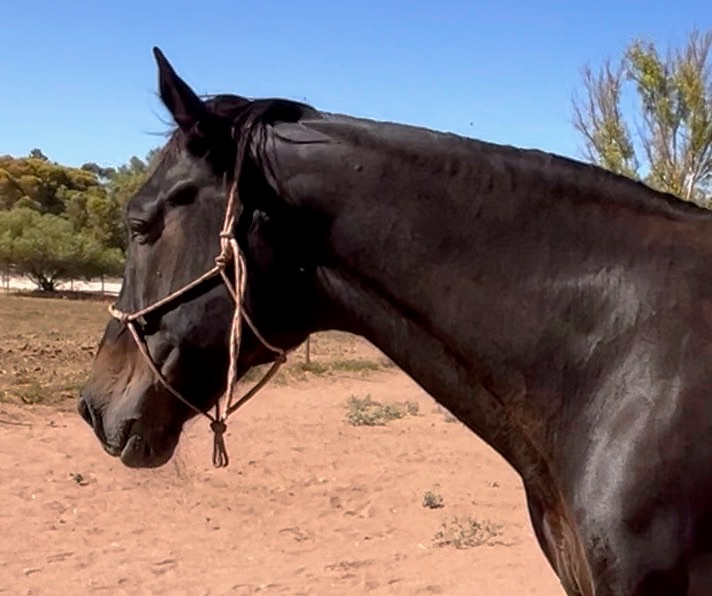
Tommy is fed a completely natural diet of 1.5 % of his bodyweight of Barley Straw and Lucerne Hay. He remained in his paddock the whole time. His crest is back to normal and other than that one day of severe lameness he has been 100% sound since. His stretched laminae have grown out completely and his hooves are strong and healthy. He was never placed on a starvation diet and continued to get his black sunflower seeds, cold pressed linseed oil, rosehips, seaweed, apple cider vinegar and Murray River Salt.
He wasn’t too keen on the Barley Straw at first but he eats it well now especially when he realised he wasn’t getting anything else.
Tommy always loves his herbal medicine and willingly takes the syringe and swallows the liquid, which is just one of the big advantages of herbal medicine, along with huge cost savings and no worries about side effects.
Denise Farrugia explains Tommy’s herbal treatment
The herbs used to treat pain and inflammation were a combination of Devils Claw & Meadowsweet and the herbs in his holistic prescription were designed to balance his digestion, reduce blood sugar levels and provide a liver tonic. The herb Blue Flag is key here as it re-adjusts the functions of thyroid, adrenal glands and pancreas. The bitter liver herb Gentian adjusts the appetite to normal and so the weight is gradually controlled.
Click here for more information about consultations with Denise.
Some Notes about Equine Metabolic Syndrome
Most horses affected with Equine Metabolic Syndrome (EMS) are overweight and have abnormal fat deposits that include a cresty neck, fat around either side of the tailhead that makes the tail look inset into the body, and fat pads around the shoulder, sheath, or udder. Horses with EMS gain or maintain weight with little feed. They invariably have exceptionally greedy appetites and have a chew rate about double that of a horse with a normal appetite. Laminitis may be a symptom especially associated with lush pasture growth in late spring and early summer.
In diagnosing EMS, Kentucky Equine says first rule out Cushings using the ACTH test, then test insulin and glucose levels. ACTH stands for Adrenocorticotropic Hormone which is elevated in horses with Cushings. Insulin is elevated in cases of EMS. Glucose is elevated in suspected cases of EMS and sometimes in cases of Cushing’s disease.
Kentucky Equine states that the ACTH test is not accurate for every horse so physical symptoms must be assessed as well. Which is exactly what was done in Tommy’s case.